

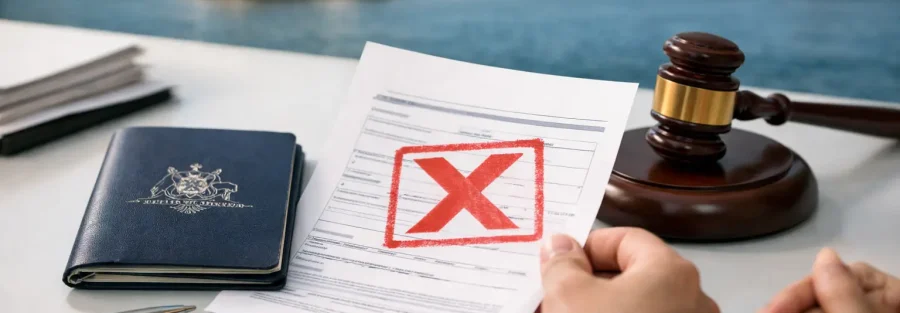
A visa refusal in Australia is not just a disappointing email or letter. For many applicants, it interrupts study plans, employment offers, family reunification, or a long-term migration strategy. If you are trying to fix refused visa application Australia problems, the first step is to stop guessing and start reading the refusal decision with precision. A refusal is rarely random. It usually points to a gap in eligibility, evidence, credibility, or compliance.
That distinction matters. Some refusals can be addressed through a better prepared fresh application. Others may need a review, and some require a complete rethink of the visa pathway before you act again. The wrong response can compound the problem, especially if you rush back in with the same weak documents and the same unsupported claims.
What a visa refusal actually means
A refusal means the Department was not satisfied that you met the legal criteria for the visa you applied for. That does not always mean you were never eligible. It may mean the evidence provided did not prove your case strongly enough, or that a key requirement was missed, misunderstood, or badly presented.
This is why experienced case assessment matters. In practice, refusals often come down to one of four issues – eligibility, documentation, credibility, or timing. For example, a student visa may be refused because the applicant did not demonstrate genuine temporary entrant factors convincingly. A partner visa may fail because relationship evidence was thin or inconsistent. A skilled visa may run into trouble because of points, skills assessment problems, or employment claims that were not properly supported.
The refusal letter is your roadmap. It tells you what the decision-maker was not satisfied about and often reveals whether the problem was factual, evidentiary, or legal.
How to fix refused visa application Australia cases properly
Trying to fix refused visa application Australia matters without understanding the exact refusal grounds is where many applicants lose valuable time. The fix is not always to appeal, and it is not always to lodge again. It depends on your visa subclass, your location, your review rights, your immigration history, and whether the refusal creates further restrictions onshore or offshore.
A proper response starts with three questions. What specific criteria were not met? Is there a review right and is it worth using? If a new application is possible, can the weakness be genuinely corrected rather than cosmetically repackaged?
If the answer to that third question is no, a fresh application may simply lead to another refusal. That is particularly risky where the first refusal has already raised concerns about your credibility or the authenticity of your evidence.
Step 1: Analyse the refusal notice line by line
Applicants often focus on the emotional impact of a refusal and miss the technical language that explains it. The refusal notice usually sets out the relevant legislative criteria, the information considered, and the reasons the delegate was not satisfied.
This is where patterns emerge. Sometimes the problem is simple, such as missing financial evidence, an invalid police clearance, or incorrect enrolment details. Other times the refusal is more serious because the Department doubted your intentions, your relationship history, your source of funds, or the truthfulness of your statements.
A careful analysis should also identify whether the refusal involved adverse information, inconsistent records, or concerns under public interest criteria. These details shape what happens next.
Step 2: Protect deadlines and review rights
Many applicants have review rights, but those rights are time sensitive. Missing a review deadline can close off an important option. Equally, lodging a review without a strategy can waste time and money if the real issue is better solved through a stronger, better structured new application.
This is not an area for assumptions. The right course depends on the visa type and the facts of the case. Onshore applicants may have very different consequences from offshore applicants. Some refusals affect bridging visa status. Some create urgent timing issues for students, workers, or family members already in Australia.
If there is a review right, the question is not just whether you can apply for review. It is whether the weaknesses in the original matter can be addressed effectively in that forum.
Step 3: Identify whether the problem is evidence or eligibility
This is the point where many people make a costly mistake. They assume the Department simply misunderstood them. Sometimes that is true. Often, however, the refusal happened because the applicant did not actually meet the legal test at the time of decision.
If the issue was evidence, the case may be repairable. If the issue was eligibility, the solution may be a different visa strategy altogether.
Take a student visa as an example. Weak evidence of financial capacity or genuine study intentions may be fixed through stronger documents, better explanation of career progression, and a more coherent study plan. But if the applicant chose a course that made no sense against their background and had a poor immigration history they did not address, the case needs more than better paperwork. It needs a defensible strategy.
The same principle applies to skilled, partner, visitor, and employer-sponsored visas. More documents do not always mean a stronger case. Relevant, consistent, credible documents do.
The most common reasons applications are refused
Across visa categories, refusal reasons tend to repeat. Applicants may not satisfy financial requirements, health or character criteria, relationship evidence standards, genuine temporary entrant expectations, sponsorship obligations, or work and skills claims. In some matters, the issue is not that the information was absent, but that it conflicted with other records already held by the Department.
That is where credibility becomes critical. Once inconsistency appears in a file, every later statement can receive closer scrutiny. Dates that do not match, unexplained employment gaps, undeclared previous refusals, or education documents that raise authenticity concerns can all damage the case beyond the original issue.
A refusal can also stem from poor preparation rather than poor eligibility. Generic statements, weak statutory declarations, badly ordered evidence, and unsupported claims leave decision-makers to fill in gaps. They rarely do that in the applicant’s favour.
Should you reapply or appeal?
There is no single answer, and that is exactly why strategic advice matters. A review may be the stronger option when the decision was legally or factually flawed, or where the applicant can present compelling evidence that addresses the concerns raised. A fresh application may be more effective where the original case was rushed, incomplete, or filed under the wrong strategy.
But reapplying without resolving the refusal reason can be worse than waiting. It may create a pattern of unsuccessful applications and deepen concerns about credibility. On the other hand, appealing every refusal is not automatically wise either, especially where the applicant never met the criteria in the first place.
The strongest approach is the one built around evidence, timing, and legal reality rather than hope.
How a stronger new application is built
If a fresh application is the right path, it should not resemble the refused one. It needs to be rebuilt from the ground up. That means checking eligibility again, testing the evidence against the legislative criteria, and preparing submissions that clearly connect the facts to the visa requirements.
A strong application anticipates concerns before the Department raises them. If there are previous refusals, they should be addressed honestly and strategically. If the case involves study, employment, investment, or family factors, the explanation should be coherent across all documents. If there are risks around compliance or interview performance, those should be managed before lodgement, not after a refusal.
This is where a firm such as Kingsbridge Australia adds value. Strong migration outcomes are usually not the result of luck. They come from disciplined screening, careful document control, and submissions prepared to protect the client from avoidable errors.
What not to do after a refusal
Do not ignore the refusal and hope time will solve it. Do not lodge a new application with minor edits and recycled evidence. Do not rely on informal advice from friends who had a different visa, different facts, and a different immigration history.
Most importantly, do not hide information in the next application because you think the Department will not notice. Previous refusals, inconsistencies, and identity records are exactly the kind of issues that can follow an applicant and do long-term damage.
A refusal is a warning, not always the end
The practical reality is that some refused applications can be repaired and some cannot, at least not immediately. The difference usually comes down to whether someone has taken the time to diagnose the problem properly before acting again. When your plans to study, work, join family, or settle in Australia are on the line, the next move should be measured, evidence-based, and protective of your future options.
A refusal can close one door, but it can also force a better strategy – and that better strategy often starts with understanding exactly why the first application failed.

